
 Contact us


Product details
Identity Threat Detection & Response (ITDR) identity protection solution
In the context of increasingly sophisticated cyberattacks, ITDR solutions are becoming a mandatory defense layer as attackers shift from exploiting devices to stealing and abusing credentials/identities. According to the original document content, threat actors are increasingly combining social engineering, information-stealing malware and post-breach internal data; while also finding ways to bypass MFA and Identity & Access Management (IAM) systems to expand access within enterprise environments.
This reality shows that traditional defense mechanisms such as firewalls, EDR, or standalone MFA are no longer sufficient to counter credential-based attacks. Enterprises need a new security layer focused directly on identity – that is Identity Threat Detection & Response (ITDR).
What is ITDR and what problems does it solve?
Identity Threat Detection & Response (ITDR) is a specialized cybersecurity solution group focused on monitoring – detecting – responding to threats targeting identities and access. The focus of ITDR is controlling the Identity Attack Surface – encompassing all identities, access rights, and trust relationships that attackers can exploit.
ITDR helps enterprises:
Comprehensive observation of identity attack surface, from centralized identity repository to endpoint
Early detection of credential theft and abuse behavior
Analyze attack paths based on relationships between accounts, systems and critical assets
Proactively prevent privilege escalation and lateral movement within systems
ITDR is considered a core component in Zero Trust architecture, where no identity or access is trusted by default.
The role of ITDR in Zero Trust strategy
According to the original documentation, protecting credentials is a prerequisite for effective Zero Trust implementation. ITDR plays a foundational role helping enterprises:
Continuously verify and monitor identity usage, including legitimate accounts
Early detection of privilege escalation behaviors, misuse, or identity compromise
Narrow the trust zone, reduce the ability of attackers to exploit existing trust relationships
Therefore, ITDR helps transform Zero Trust from an architectural concept into actual operational capability in complex IT environments.
Protection scope of ITDR Solution according to original documentation
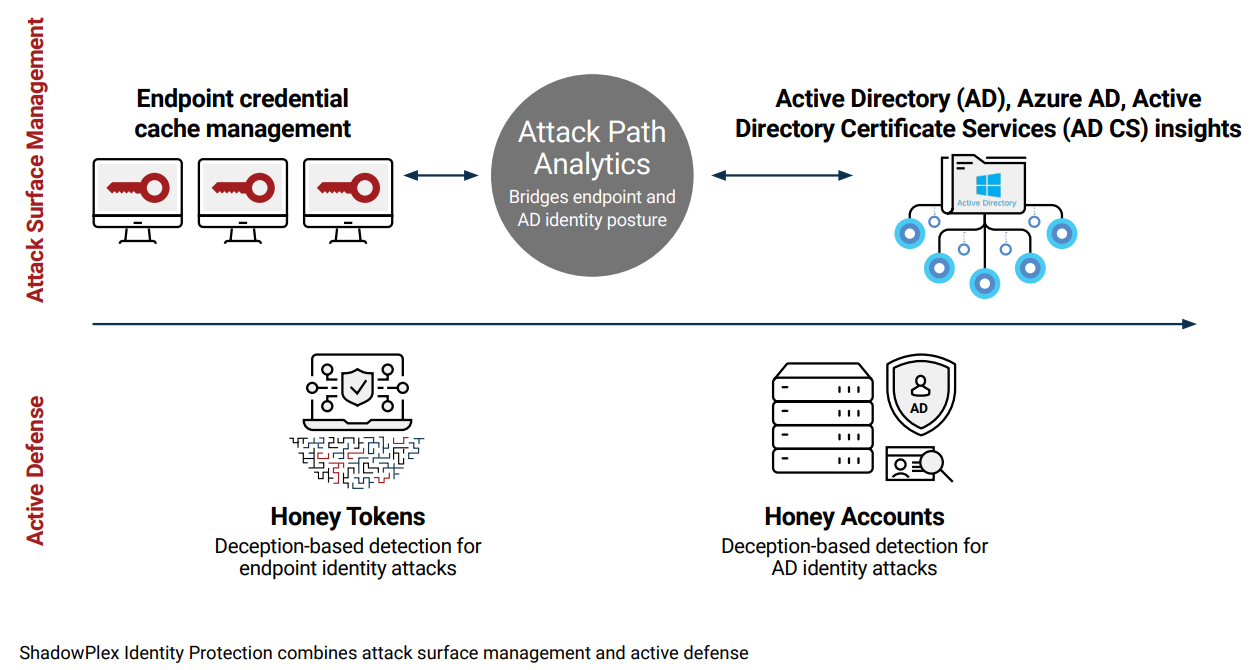
The ITDR solution, with a typical deployment model described in the original documentation through Acalvio ShadowPlex Identity Protection, comprehensively covers the following layers:
1. Identity repositories: AD, Azure AD, AD CS
ITDR helps identify risks in the identity repository such as unprotected administrative accounts, over-privileged accounts, misconfigurations and exploitable weaknesses (e.g. related to SPN and Kerberoasting capability). The solution analyzes identity attack surface without requiring elevated privileges or impacting system operations.
2. Endpoint credential cache
One of the common blind spots for enterprises is login credentials scattered across servers, workstations and laptops. ITDR provides comprehensive visibility into these credential caches, while supporting deletion or replacement of credentials with decoy credentials to reduce the risk of abuse.
3. Endpoint attack surface management
ITDR supports reducing the attack surface on endpoints by detecting configuration weaknesses, recommending disabling insecure protocols or features, as well as strengthening security controls to limit unauthorized access paths to critical assets.
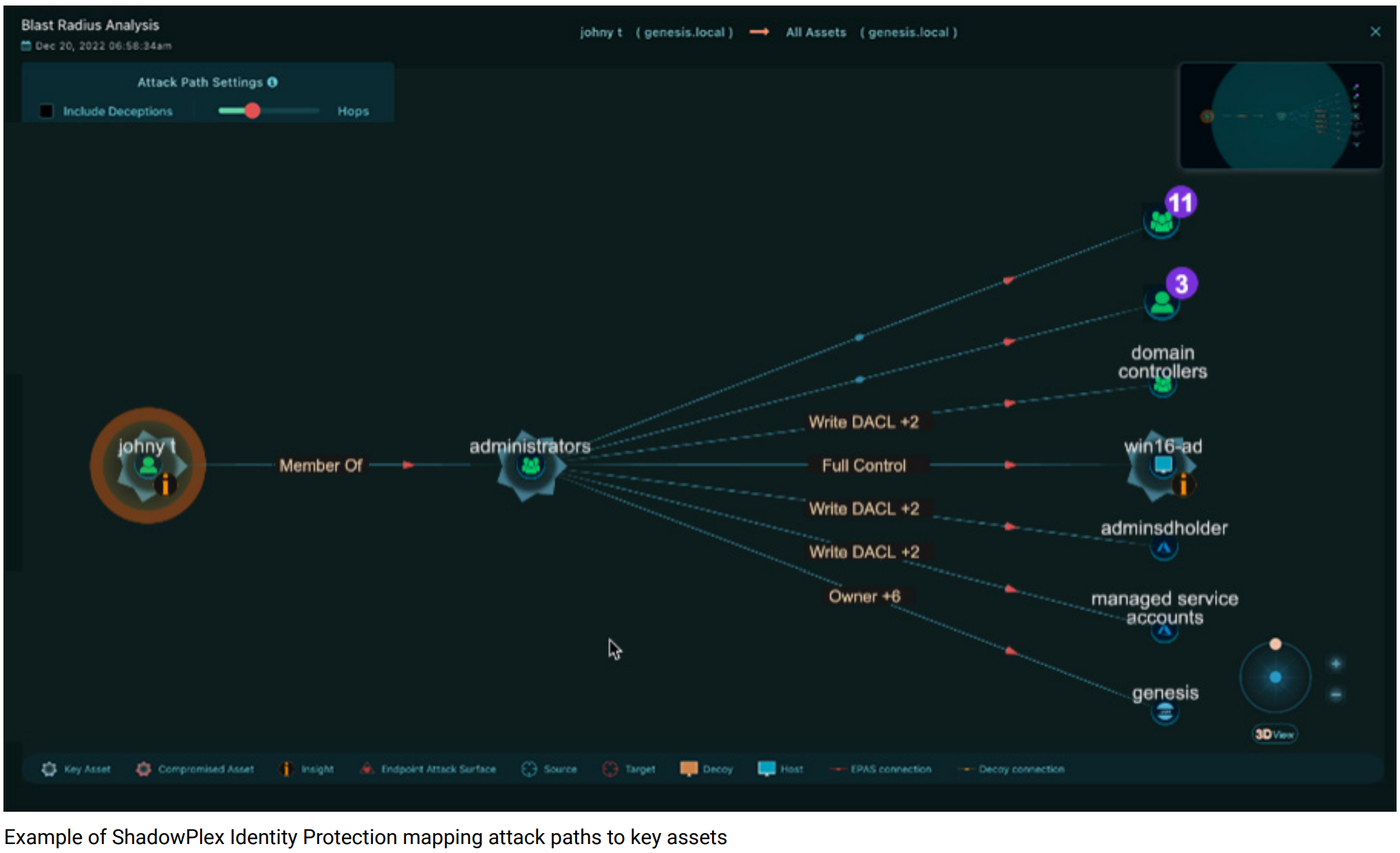
4. Attack Path Analysis
ITDR solutions analyze potential attack paths based on relationships between identities, endpoints, and critical assets. Accurately identifying attack paths helps security teams prioritize remediation at the right "breaking point," thereby blocking privilege escalation and lateral movement early.
Proactively defend against identity-based attacks
Beyond detection capabilities, the source document emphasizes the role of Active Defense in ITDR through deception techniques.
Honey accounts và Honey tokens
Honey accounts are decoy accounts created in Active Directory and Azure AD, mimicking the behavior and naming conventions of real accounts.
Honey tokens are fake credentials planted in the login information cache on endpoints, linked to decoy accounts in AD, Azure AD or AD CS.
When attackers attempt to use these fake credentials, ITDR will immediately detect and alert.
Value of Active Defense
Proactive defense mechanisms help:
Early detection of credential-based attacks
Lure attackers away from real assets and data
Slow down the attack process and reveal tactics, techniques and procedures (TTPs)
Detect common techniques such as Pass-the-Hash (PtH), Pass-the-Ticket (PtT) and attacks related to AD CS
Protect privileged users and detect Insider Threat
According to the original documentation, ITDR specifically focuses on protecting high-risk objects such as privileged users, system administrators, service accounts and critical enterprise accounts.
The solution also provides the ability to detect insider threat behaviors, including employees or internal contractors using credential theft tools, privilege escalation or accessing spoofed assets (e.g. password lists, customer databases or documents containing sensitive information).
ITDR in the modern SOC ecosystem
ITDR solutions can integrate with other security platforms and tools such as SIEM, SOAR, EDR, IAM, and existing IT systems. This integration helps:
Timely alerts to SOC when abnormal privilege escalation or unauthorized access occurs using stolen credentials
Reduce false positives and prioritize high-risk threats
Automate response and remediation of identity-related incidents
Reduce operational pressure on security teams and identity management
ITDR does not replace existing solutions but adds a specialized defense layer for identity – the weakest link in the cybersecurity chain.
Recognition from independent evaluation organizations
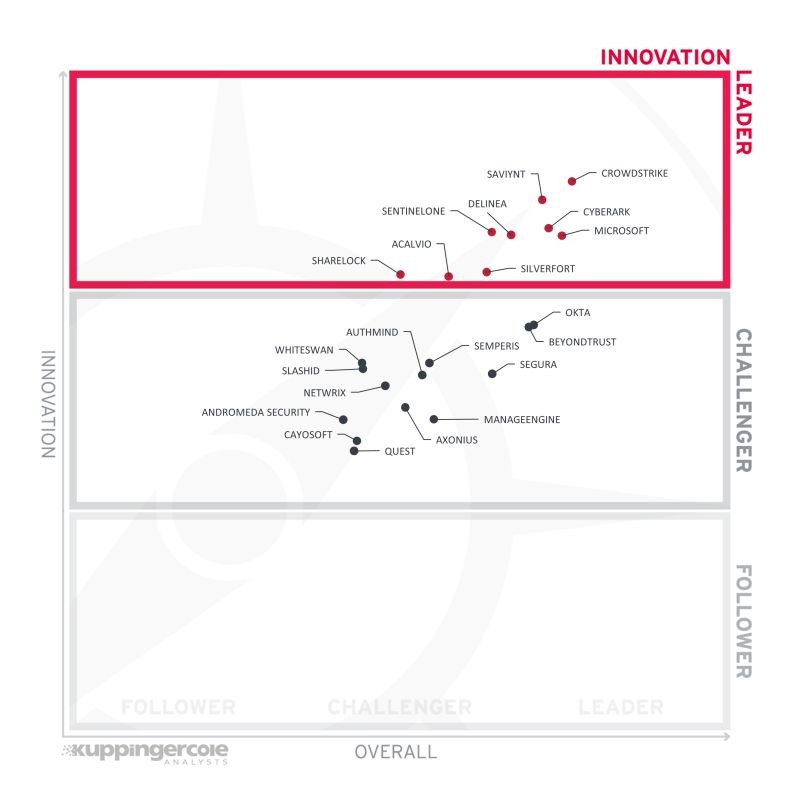
According to the original document, Acalvio is honored as Innovation Leader in KuppingerCole's ITDR ranking, affirming innovation capabilities in the field of identity protection and proactive defense.
ITDR solution provided by Sonic
The Identity Threat Detection & Response (ITDR) solution is currently being consulted and deployed in Vietnam by Sonic Technology Solutions Joint Stock Company based on world-leading technology platforms, meeting identity protection needs in the context of digital transformation and Zero Trust.
Sonic provides comprehensive consulting, testing, deployment, and technical support services, helping enterprises quickly control their nominal attack surface and enhance defense capabilities against modern threats.
👉 Learn more about other cybersecurity solutions at:https://sonictech.com.vn/
👉 Official website of the brand Acalvio: https://www.acalvio.com/